
Advanced Driver Assistance Systems (ADAS) are electronic systems in vehicles that use advanced technologies to assist drivers in the driving process. These systems enhance vehicle safety and overall driving experience by using sensors, cameras, radar, and other technologies to detect potential hazards and assist the driver.
ADAS relies on a combination of hardware and software components working together:

Mounted on the windshield, mirrors, and bumpers to provide visual information

Detect distance and speed of objects around the vehicle

Measure proximity for parking assistance

Uses laser light to create detailed 3D maps of surroundings

Process data and make split-second decisions
Advanced Driver-Assistance Systems (ADAS) rely on precise sensor calibration to function accurately. Even a minor misalignment in a sensor or camera can shift its scanning field by up to 50 feet or more, potentially causing it to overlook critical hazards. Proper calibration ensures that each component operates within its designated detection range to maintain safety and system reliability.

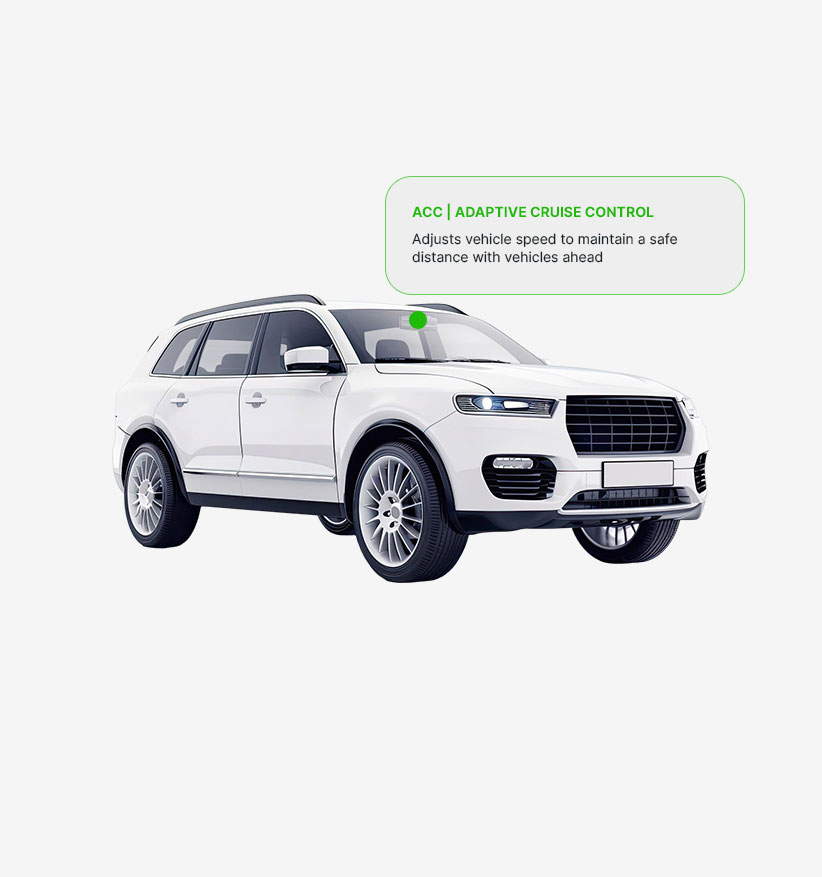
Automatically adjusts vehicle speed to maintain a safe following distance.

Detects nearby objects and generates a precise 3D representation of the vehicle’s surroundings.

Delivers a full 360-degree, bird’s-eye view to assist drivers with easier and more precise parking.

Enhances driver visibility in low-light conditions and adverse weather.

Alerts the driver when a vehicle approaches closely from behind.

Detects vehicles in the driver’s or passenger’s rear corners and alerts the driver to blind-spot activity.

Alerts the driver when the vehicle begins to drift out of its lane.

Alerts the driver when a pedestrian is detected in the vehicle’s path.

Provides audible, visual, or haptic alerts to warn of obstacles during low-speed parking maneuvers.

Recognizes traffic signs and displays the relevant information to the driver.
Contact us today to schedule your appointment with our certified technicians